
Color Play Lab
Color Play Lab is a free, wonder-driven platform for exploring how color actually works — not as a fixed property of objects, but as something shaped by light, context, and the biology of human vision. Every experiment on the site is hands-on: you drag, mix, shift, and compare. You don't read about color concepts — you experience them.
Interactive Color — A Reboot
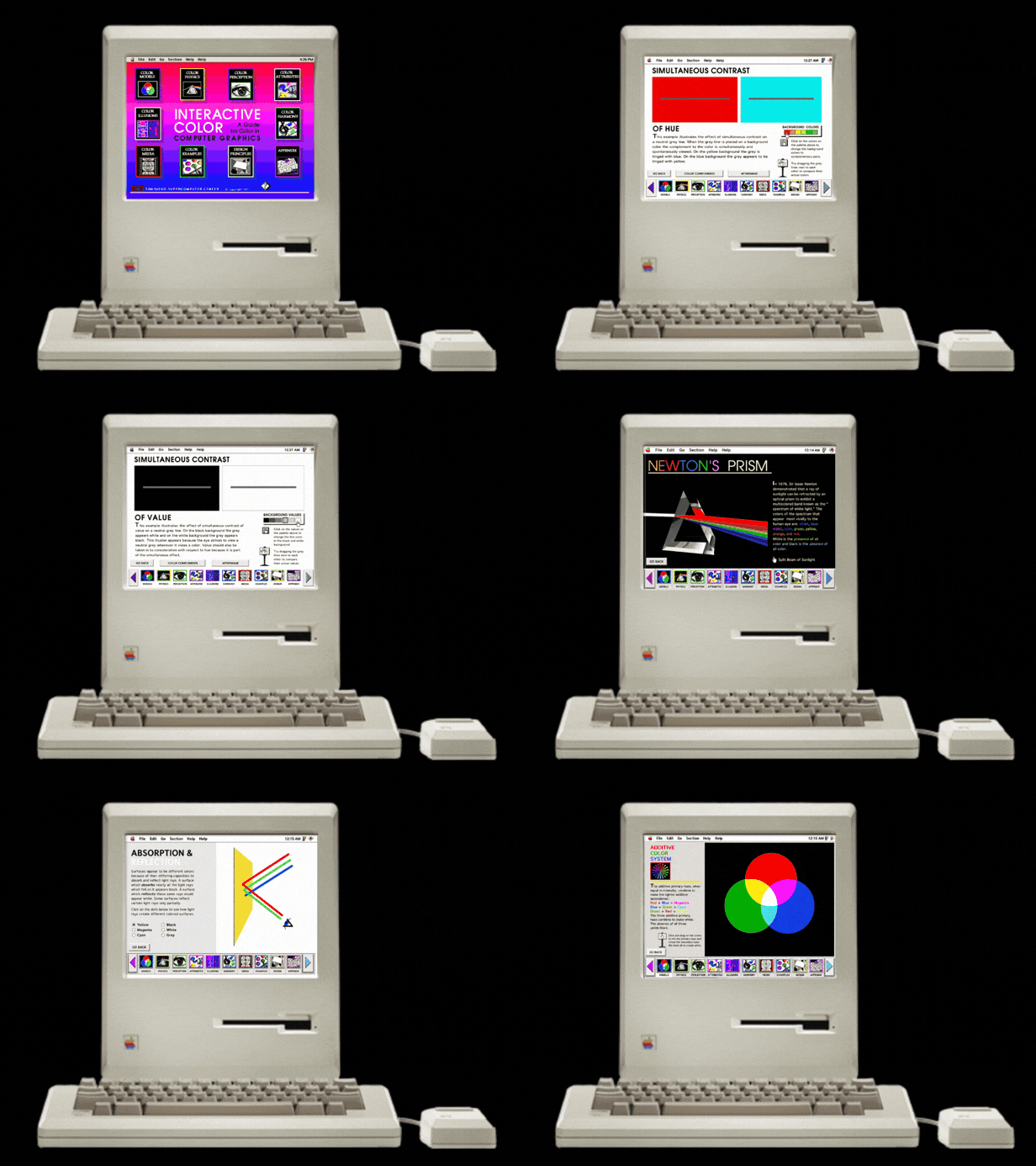
Color Play Lab is a reboot of Interactive Color: A Guide to Color in Computer Graphics, created in 1991 by Holliday Horton, as Senior Animator and Research Artist at the San Diego Supercomputer Center, with funding from the National Science Foundation and the State of California. The program offered a non-linear, exploratory interface that let users actively manipulate color relationships rather than passively observe them.


Thirty-five years later, the core idea remains: color is not fixed, but shaped by context, light, and perception. What has changed is everything else. Color Play Lab carries these same concepts into a contemporary interactive environment — one where the palette has expanded from 256 colors to millions.

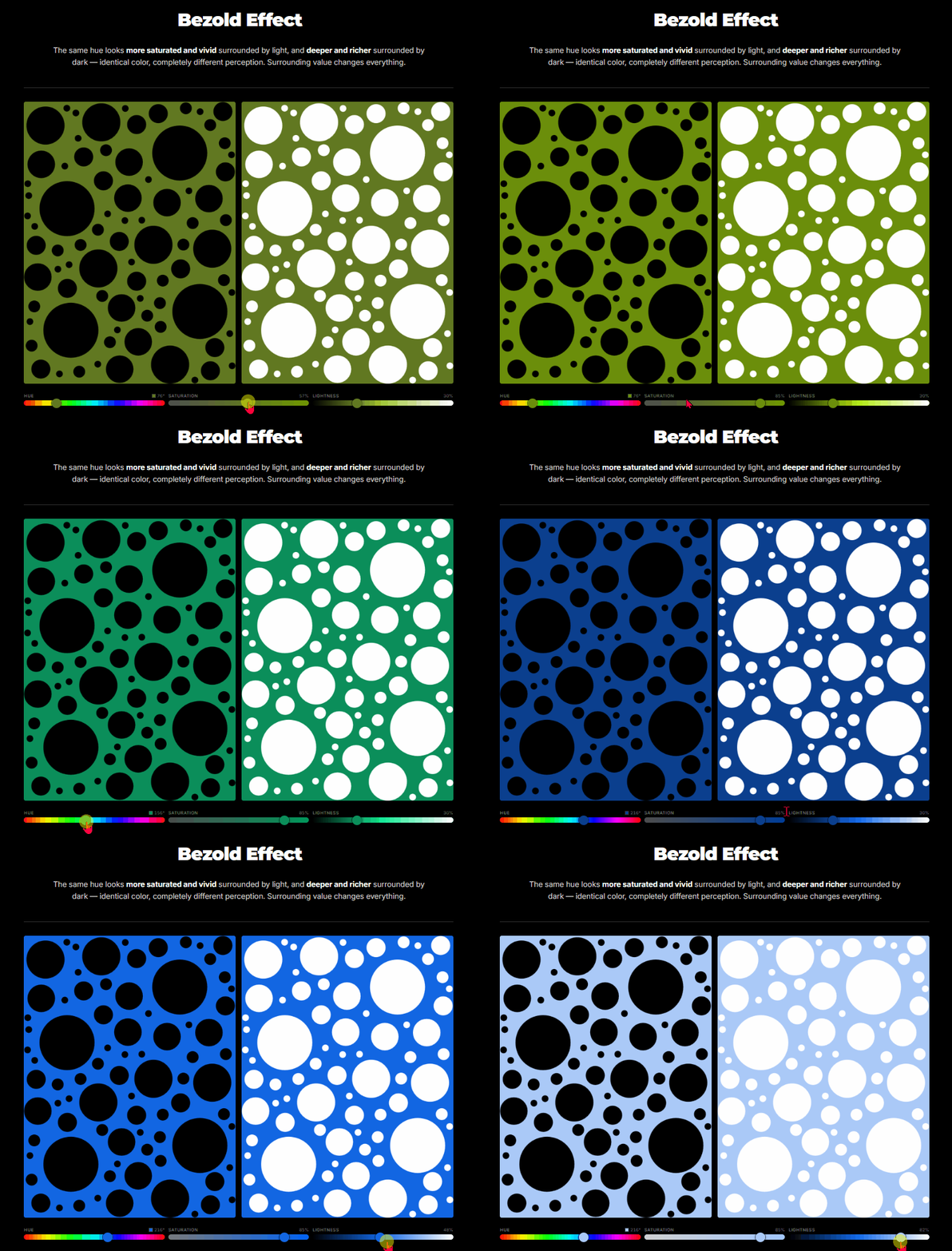
Color Play Lab, 2026
Interactive Color, 1991
Interactive Color reached an audience far beyond its origins:
• Used as the curriculum for the first digital color course at UCSD Extension, taught by Holliday Horton
-
Showcased at SIGGRAPH 1991 — Tomorrow’s Reality Show, one of the first hypermedia projects
• Featured at Apple’s Higher Education Forum
• Presented at conferences in Germany, where professors sought to learn how to build interactive media as teaching tools
• Distributed to over 3,000 universities worldwide through NSF funding
What people were saying about Interactive Color in 1991


"Interactive Color is a must for every research department that seeks to present data in an effective manner."
Supercomputing Review
October 1991
"Especially terrific. The examples are mostly classic but having them interactive on the screen really brings them to life better than any book could."
James Bradley
Bradley Group
"Congratulations on a nice piece of work and a service to the community."
Marc Rettig
Communications of the ACM
"An excellent and thorough interactive application… an example of exemplary interactive design."
Simon Penny
University of Florida